 NFC Expert
 Content
- Video reviews
- Equipment and design
- Software
- Cameras
- Performance and benchmarks
- Conclusions
When Meizu introduced the 15 line at the beginning of last year, led by the flagship 15 Plus, there were exactly four questions about smartphones. They were: why last year’s Android Nougat, why the flagship does not have Snapdragon, why the screen is outdated 16:9 and where the hell is NFC? Almost all of these claims were closed as early as last year’s 16th, and 16s, released earlier this year, finally answered all user requests. Here Pie, Snapdragon 855, 18.6: 9 and full NFC. True, new questions have appeared over the year. Let’s deal with them.
Specifications Meizu 16s:
- Network: GSM (Band 2, 3, 5, 8), CDMA (BC0, BC1, BC6, BC10), WCDMA (Band 1, 2, 3, 4, 5, 8), TD -SCDMA (Band 34, 39), FDD-LTE (Band 1, 2, 3, 4, 5, 7, 8, 20), TDD-LTE (Band 40)
- Platform (at the time of announcement): Android 9 Pie with Flyme 7.3
- Display: 6.2″, 18.6:9, 2232 x 1080 pixels, HDR, 10,000:1, 403ppi, 430 nits, AOD, AMOLED, 2.5D glass
- Camera: Dual 48MP (Sony IMX586, f/1.7, 79-degree field of view, autofocus, 0.8µm (1.6µm in 4-in-1 mode, OIS, 6 lenses) 20MP (IMX350, f/2.6, 5 lenses), 6-element LED flash, AI, bokeh, Night mode, 4K video recording
- Front camera: 20 MP, Samsung 3T2, f/2.2, 5 lenses, AI, bokeh, Face Unlock, beautification for men and women
- Processor: 8 cores, Kryo 485, 7 nm, 1 x 2.84 GHz 3 x 2.42 GHz 4 x 1.8 GHz, Qualcomm Snapdragon 855
- Graphics chip: Adreno 640
- RAM: 6/8GB LPDDR4X 2133MHz
- Internal storage: 128/256 GB UFS 2.1
- Memory card: no
- Dual GPS, A-GPS, GLONASS, Beidou
- Bluetooth 5.0, LDAC, aptX/aptX-HD
- Wi-Fi (802.11a/b/g/n/ac), 2.4/5GHz, Wi-Fi Direct, 4×4 MIMO
- NFC
- USB 2.0 Type-C
- Audio: stereo speakers, amplifier CS35L41
- In-screen fingerprint scanner
- Battery: 3600 mAh, fast charging mCharge 3.0 (24W)
- Dimensions: 151.9 x 73.4 x 7.6 mm
- Weight: 165 g
Are there Meizu smartphones with NFC module?
The company’s latest devices do not have the presented chip on board. This is due to the lack of popularity of this technology in China, the home of the brand. All models released from 2016 to 2018 (even the flagship ones) are deprived of NFC. Therefore, the same Meizu 16th, being a smartphone with an excellent processor and camera, cannot impose serious competition on Samsung or Apple gadgets.
Meizu with NFC module list:
- MX3;
- MX4 Pro;
- PRO 5;
- PRO 6 Plus.
- MX series smartphones
Meizu MX3, presented at the end of 2013, was the first device of the company with NFC module. This is a compact smartphone by today’s standards. The dimensions of the device are 139x72x9.1 mm, and the weight is 143 grams. The body of the device is made of plastic, which is used in the most affordable models. Under the hood of the gadget is an 8-core Samsung Exynos 5410 processor and a PowerVR SGX 544MP3 video chip.
The main feature of the NFS is that it operates only at short distances. To exchange data, the devices must be no further than 20 cm from each other. This ensures the security of information – fraudsters cannot intercept the signal.
The transfer speed is average – about 424 kbps, so transferring large files using NFC is not very convenient. However, for instant operations with data that weigh little, this speed is optimal.
Another advantage of the technology is that the chip establishes communication almost instantly. To do this, she needs no more than 0.1 seconds.
You can use the NFC function in the following ways:
- pay instead of a card in shops;
- send data faster than via Bluetooth;
- pay for travel in public transport;
- read information (for example, from business cards), etc.
Which Meizu models use NFC technology

Here is a list of all Meizu models that use Near field communication technology:
- MX3 32 GB
- MX4 Pro 16/32 GB
- PRO 5 32/64 GB
- PRO 6 Plus 64/128 GB
All of the above smartphones have a built-in module, but are somewhat outdated. The newest of them is Pro 6 Plus 64GB, it was released at the end of 2016, went on sale at the beginning of 2017. Meizu pro 5 with nfc has also been and is still popular. The smartphone belongs to the category of flagships, has a number of advantages, is appreciated by users, despite the fact that it was released back in 2015. You can buy it at a price of 20,000 rubles.
Equipment and design
Meizu 16s comes in a solid black box with rather austere contents: smartphone, SIM needle, documentation, USB cable and charger. Everybody. No case, no headset, unfortunately, no. But at least they were not greedy with charging – it accelerates to 24 watts! How quickly the smartphone is charging at the same time, I’ll tell you at the end of the review, but for now let’s examine it externally.
Meizu 16s has three colors. Two of them – white and black – you saw in our videos, the third option is blue. The most practical and noble version seems to me to be white – fingerprints are practically invisible on it, the back shimmers beautifully, and I visually like the white frame of the screen more.
Black Meizu 16s is also not so simple. Under the glass, he hides a carbon-like texture. A kind of hello to old motorolas and others, where there were real carbon backs. But at 16s the texture is only visible from certain angles and looks out of place in my opinion. You give real carbon fiber in flagships! (Unfortunately, this has become a rarity in recent years.) However, this is only a matter of taste, and you may like the black version with a hiding texture.
But what you can’t help but like is the lack of cutouts and the complete symmetry of the front panel. Android vendors have not yet been able to completely get rid of the “chin”, and the desire to minimize the indentation from above leads to the need for a cutout in the screen (or a movable frontal structure) and an asymmetrical design.
Let’s take a closer look at the bottom end. There is a lot here, I will list from left to right. First up is the SIM tray. Two nano-SIMs are inserted into it from different sides, memory cards are not supported. Next comes the microphone, followed by the USB Type-C port. There are no other ports here, including a headphone jack, and there is also no 3.5 mm adapter in the kit – apparently, Meizu completely scored on its audiophile roots, and mobile sound lovers have nothing left but LG.
On the right side are the volume rocker and the lock key. They are located very high, so you have to reach for them. The fingerprint scanner is hidden under the display. It is calm with dirty or wet fingers and works even through a cheap protective film, but recognition takes noticeably longer than conventional scanners. And even more than BBK (Vivo, OnePlus) in-screen scanners.
Meizu 16s screen has 18.6:9 aspect ratio and Full HD resolution (2232 x 1080 pixels). The diagonal is 6.2 “, which gives a pixel density of 403 ppi. If it’s hard to imagine, the display is the same width as the old 5.5″ models with 16:9 or 6” devices with 18:9. The maximum standard display size , in general.
The panel is made with OLED technology, which means infinite contrast (Meizu says 100000:1, but it’s hard to say what she means), low power consumption. and PWM. Yes, unfortunately, the screen of the 16s is very “noisy”, at low brightness the measured modulation coefficient exceeds 100%. DC Light technology (aka DC Dimming), which allows to reduce PWM, is declared, but in practice it does not work on the current global firmware.
Software
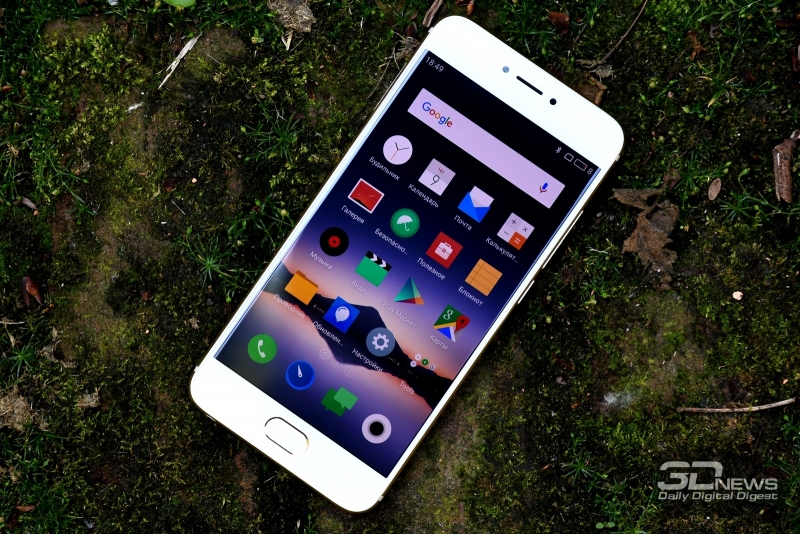
Meizu Pro 6 uses the Android 6.0 Marshmallow operating system with the latest, fifth version of the Flyme proprietary shell that cannot be disabled. We talked about the fourth version in the Meizu MX4 review, here we will talk about its key differences. Flyme 5 first appeared on the Pro 5 model, which passed us, at the end of last year.
Externally, the shell has not changed much – the general style, inspired by the latest versions of iOS (flat icons, thin fonts), is quite recognizable. The icons themselves also remain the same. But on the desktop, an additional line for icons has been added, which allows to reduce the total number of screens – a special application menu, as has already been customary, is not provided here.
The notification shade has changed, and the menu of active applications now looks more standard – and this is good, there were problems with it before. Also, the settings now look more standard, and there are more of them – Flyme is gradually approaching the usual Android in its functionality before, to be honest, the shell even seemed slightly truncated in comparison with the “clean” OS – usually the problem, on the contrary, is congestion.
It is now possible to answer calls and SMS without opening the actual application – this can be done directly on the desktop, the icon appears in its upper part when a call or message arrives. Meizu branded applications have been updated, a “Useful” folder has been added with various additional applications: from a flashlight to a magnifying glass.

Flyme 5 is a very fast, cute and quite comfortable shell. I would not call it an unambiguous advantage of the device, as it can be said, for example, about MIUI and Xiaomi, but you can’t write it down as a disadvantage either. There are no cardinal differences from standard Android here, it does not irritate with non-removable applications like Samsung’s TouchWiz, you won’t have to seriously retrain to use a smartphone.
Meizu listened to dissatisfied customers and began to release flagships with the current version of Android on board. Meizu 16s has Android Pie, and there can be no complaints in this matter. The claim may be different: it is not clear whether the 16s will receive any updates, and if so, how many? Considering that Meizu is minimizing the efforts directed to the development of the international version of Flyme OS, the second scenario is quite likely, and the next flagship may be left without updates.
I would like to see updates. The once best Chinese shell Flyme OS now looks rather strange and clumsy against the backdrop of neat competitors. Of course, it is still far from Funtouch OS, but in general, EMUI, MIUI, and even more so OxygenOS look nicer and offer more convenient features. However, the firmware is quite convenient and stable so that it can be used – I did not have any special problems in the process. But I would like more.
Setting to enable/disable the NFC function in Meizu smartphones
Enabling NFC technology on Meizu phones is quite simple and easy.
To do this, you must perform the following list of actions, such as:
- Initially, you need to enter the phone settings. In them you need to select the line “Advanced”, after which – the section “More”.
- In the window that opens, find the corresponding short-range field. Opposite it, you need to check the box.
- After completing the above steps, the Android Beam function, which is responsible for the operation of NFC, should start automatically.
Important: If the Android Beam system does not automatically start, you can do it manually. To do this, go to the “More” section in the same way, and then start the process yourself.
Cameras
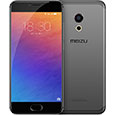
Meizu Pro 6 uses new modules of both cameras: the front one is 5 megapixels, the main one is 21. First, let’s talk about the main one. In addition to resolution, it is worth mentioning the aperture ratio (f / 2.2), the equivalent focal length (31 mm) and the physical size of the sensor (quite decent 1 / 2.4 ”). A hybrid autofocus system is used, combining the phase focusing method with a laser; Meizu’s signature feature is a large circular flash with ten diodes, giving a uniform and powerful backlight.
The main camera of the Meizu 16s is based on a 48-megapixel sensor with 0.8 micron pixels and a six-lens optics with f/1.7 aperture. Attached to it is a 20-megapixel telephoto lens with five-element f/2.6 optics and a flash of six (!) LEDs. I don’t understand, however, why Meizu didn’t spend money on diodes with different color temperatures – even if there were fewer of them, they could adapt to the lighting and not harm color reproduction.
How to put AndroidPay on Meizu smartphones
Many device owners are wondering why Android Pay does not work on Meizu and how to solve this problem. Despite the fact that relatively little time has passed since the launch of the system, messages regularly appear on the network that the payment system simply does not work, despite the fact that all the requirements for filling smartphones are met in the prescribed manner.
- Availability of the Android operating system version 5 and higher installed on the mobile device, the firmware must be stock. If the firmware is custom, you will need to edit the ro.build lines in the corresponding system file of the device. If this is not done, the program will not pass the test and the long-awaited work with the payment system can simply not wait;
- You will definitely need to unlock the bootloader, with which you can easily install custom recovery on your phone. If suddenly this does not work out, it will need to be unlocked, for which you just need to contact specialists who perform this kind of work;
- Devices will need to get the appropriate superuser rights, which is quite simple, for this you only need to use the original non-system SuperSU, and also use the help of the MagiskSU component;
- It may be that root is obtained on the device directly using other utilities (this state of affairs is most often noted directly on custom-type firmware). First you will need to remove it, and then install it using the components described in the paragraph above.
It is worth noting the need to remove an unsupported version of root, for which a specially developed script is used. Finding such a script will not be a problem, you can also do this on his XDA developer site. With a correct and consistent approach, the maximum possible use of the functionality of the program is ensured, the subsequent installation of the payment system and payment with its help for the necessary services. This is a special moment, you need to pay maximum attention to it.
Performance and benchmarks
The most boring section. I can write “Snapdragon 855, everything is fine” and move on to autonomy. Indeed, no matter what game you take, either Meizu 16s can handle it, or no one can handle it. Whatever difficult computing task for a smartphone can think of – no one can greatly surpass Meizu 16s in solving it. True, the smartphone will get very hot along the way and start throttling (but not stronger than competitors) – and we have a separate story about this.
In the first video about Meizu 16s, we showed you a cool white smartphone. He was cool not because he was white (we’re not racists), but because he didn’t throttle at all, consistently delivering great results in benchmarks and huge fps in games. It was a test sample – these are given to reviewers at presentations, and closer to the release of the smartphone they are taken away or changed to a commercial sample.


Meizu 16s commercial sample
Meizu 16s showed us the true motives of companies. At presentations, reviewers are given special samples with a special version of the firmware, in which throttling and any struggle with heating are minimized. Such devices cannot live for a long time (components wear out faster due to constant heating) and are even dangerous (the battery has a much greater chance of exploding), so they do not go into mass production, but more “quiet” options.
As a result, in the first days after the announcement, the Network is flooded with videos with incredibly productive smartphones, everyone admires the growth of the population of antituev parrots, and even less powerful, but more reliable devices go on sale. Thank you, Meizu, for helping us figure out this trick by providing a commercial sample for testing as well.
By the way, Huawei did exactly the same with the Mate 20 Pro – at the announcement, the phone gave out about 310 thousand parrots in AnTuTu and fought well with throttling, but in reality it could not take even 300 thousand, and after a series of updates it generally began to issue only 200-270 thousand points, but the deed was already done – after the announcement, the Network managed to flood the high results in tests and games.


Commercial Meizu 16s in “optimal” mode
The battery capacity of Meizu 16s is 3600 mAh. The smartphone is quickly discharged under load (from 100% to 72% per hour in the game Shadowgun Legends), but it lasts a very long time with simpler tasks. For example, in the video playback mode, the smartphone was discharged in about 18 hours (the inconvenient Flyme OS interface does not allow me to say for sure – there is no normal discharge schedule).


I tried to screenshot the results of autonomy tests, but I didn’t get anything better
Meizu 16s may have 6 or 8 GB of RAM, the amount of ROM also varies (128 GB or 256 GB), but it cannot be expanded in any way. Wireless technologies are in order – Wi-Fi 5, Bluetooth 5, dual-frequency GPS plus four national systems, NFC (payment in stores passes). There were no problems with the quality of the navigation, neither with Wi-Fi, nor with cellular networks, the voice is also transmitted well.
Meizu Pro 6 is the first smartphone based on the top Mediatek platform. In this case, this is Helio X25, there is also a version with X20, which is distinguished by a slightly lower clock speed of the cores and the graphics subsystem. By the way, there are ten cores here: two Cortex-A72s at 2.5 GHz, four Cortex-A53s at 2 GHz, and four more Cortex-A53s at 1.4 GHz.
The platform also has a Cortex-M4 companion core with a frequency of up to 364 MHz, which is designed to process information from sensors and perform some other functions, such as playing audio in the background.
Graphics subsystem – ARM Mali T800 series clocked at 850 MHz. Quite a serious chip, but the whole system as a whole suffers from a lack of optimization – this explains the low results in graphics tests (primarily in GFXBench and 3DMark) and, separately, in the WEBXprt benchmark, where Pro 6 showed a very low result, comparable to those , which is shown by mid-level devices. In particular, similar numbers are given by Xiaomi Mi4i and ASUS Zenfone 2 Laser.
Another point is the tendency of Meizu Pro 6 to overheat. I managed to encounter this several times in a couple of weeks of testing: a metal smartphone became so hot that it was almost impossible to hold it in my hand, and at the same time refused to perform some simple tasks like launching the camera application. However, after a while it cooled down, not even requiring a reboot, but leaving a bad aftertaste.
Meizu Pro 6, despite the Full HD display, is equipped with 4 GB of RAM – this is more than enough for the needs of a smartphone, it works quickly in most situations. Rare unpleasant moments are associated with overheating. However, it is still impossible to achieve a high FPS frequency on top toys at maximum settings – the Mediatek flagship platform does not reach the Snapdragon 820 or Exynos 8890 level.
The amount of flash memory is from 32 to 64 GB depending on the version of the smartphone – there are two on sale to choose from. None of them are friends with microSD – you can’t add a memory card to the built-in drive in the Pro 6.
Communications and wireless communications
The part about wireless modules when talking about flagship smartphones can be copied from time to time, but Chinese brands sometimes present surprises – sometimes they suddenly remove NFC, sometimes they forget to support 5GHz Wi-Fi. In the case of Meizu Pro 6, however, it does without unpleasant discoveries: Bluetooth 4.1, Wi-Fi 802.
11ac/b/g/n and work with LTE networks – with a maximum speed of up to 300 theoretical megabits per second (Cat. 6). But there is no support for NFC and the 20th band, which is important for Russia, on which, in particular, Beeline operates. Subscribers of this operator – owners of Meizu Pro 6 will have problems when using LTE.
The navigation module works with GPS (with A-GPS support), GLONASS, BeiDou. And it works very well: it takes 10 seconds to search for satellites, after which the smartphone is already ready to guide you on the map, contacting 14 satellites and focusing on 13 of them; over time, this number will certainly increase. Separately, the accuracy is impressive – up to one meter.
Withdrawal
Meizu has really fixed all the problems that were in its previous flagships. But it’s’ too late. The smartphone market has again shrunk to a few prominent manufacturers (Samsung, Huawei / Honor, BBK (Vivo, OPPO, Realme, OnePlus), Apple, Xiaomi) and a scattering of brands that are of little interest to anyone and are perceived solely as “alternative”.

Their sales are rapidly declining, they are closed or merged. Meizu, fortunately, is holding on so far – I personally keep my fingers crossed for every company that is not on the list above and is trying to withstand the onslaught of giants – but it is getting harder for her to do this, and first of all it affects the quality of the software.
If Meizu followed the path of Nubia and ASUS, releasing smartphones with pure or almost pure Android outside of China, I would have exactly three complaints about 16s – width, audio jack and microSD. Moreover, each of them is not very significant, and competitors can often find stronger flaws. Indeed, in general, Meizu 16s is a very nice smartphone with excellent hardware and a chic design.
Most modern Meizu models do not have NFC. Fans of the brand are in anticipation and do not purchase devices available on the market. Everything goes to the fact that the situation will change in 2019, when the Chinese will introduce the 16S. In the meantime, we see how the chip begins to appear in the main competitors in the face of Xiaomi.
Video reviews
Tags: meizumeizu 16s
meizu meizu 16s
The Meizu Pro 6 smartphone is a hybrid mobile device from the well-known Chinese manufacturer Meizu. The gadget was announced in April 2016. The main feature of this model is that it supports 3D Press technology, which is rare among Android devices. Another of the strengths of Meizu Pro 6 is sound.
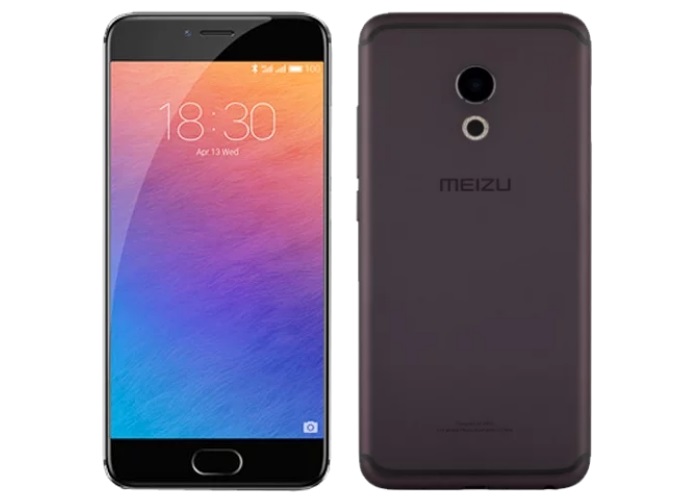
Pro 6 in metal looks really expensive and aesthetically pleasing. The model is difficult to confuse with something, looking at the reverse side of the smartphone. The designers did a good job on it, beating the laser focus with a ring flash. The flash itself is without features, but on the other hand, it gave the Pro 6 a characteristic personality. Light and proximity sensors are located above the display, there is also a speaker, LED indicator and front camera.
Compared to the previous Meizu Pro 5, this version is much smaller in size, which makes it easy to operate it with one hand. Available colors: gold, silver, grey, fire red, rose gold. Dimensions: height – 147.7 mm, thickness – 7.3 mm, width – 70.8 mm, weight – 160 g.
Display
Meizu Pro 6 is equipped with a 5.2-inch Full-HD Super AMOLED display that supports 3D Press. The screen is able to recognize the force of pressing, like, for example, the iPhone 6S. You click on the icon with the handset, and in the drop-down box you can choose who to call from your favorite contacts. The display size is 65 x 115 mm, the standard screen resolution is 1920 x 1080, the dot density is 424 ppi. The display brightness is adjustable, and the presence of a proximity sensor will save you from unnecessary commands of the unlocked screen.
With 4 GB of RAM and a 10-core Mediatek Helio X25 chipset, Meizu Pro 6 can easily handle any game, even the heaviest such as Dead Trigger 2 or Asphalt 8. All this is complemented by the powerful Mali-T880 graphics accelerator MP4. The interface works smoothly, switching between applications is carried out without delay.
Meizu Pro 6 offers three processor modes: balanced, power-saving and productive. As for games, in this case it is better to choose a productive mode, and for everything else, a balanced one will do. The amount of built-in flash memory eMMC 5.1 is 64 or 32 GB. Supports connecting flash drives to the Micro-USB port in USB OTG mode. At the same time, there is an unusual USB Type-C and a slot for two SIM cards.
The 2560 mAh battery in the Pro 6 is non-removable. During testing, the smartphone continuously played video with the maximum screen brightness, with such a load the charge was enough for 11 hours, and in the game Asphalt 8 with a comfortable brightness value, only 25% of the charge was consumed per hour. The battery charges quickly, 1 hour is enough for it to reach 100%.
Communication and sound
The manufacturer is attentive to the sound quality, so all Meizu smartphones have a separate chip responsible for the quality of music in the headphones. For comparison, we took Samsung Galaxy S7, Marshall London and LG G5 SE. As a result of all the tests, Meizu Pro 6 became the undisputed leader. The model has the most pleasant bass and natural sound. Supports audio formats such as: AAC, AAC, eAAC, AMR, AMR-NB, AMR-WB, FLAC, MIDI, MP3, OGG, WMA, WAV.
SIM card slots support LTE Cat.6 networks at speeds up to 300 Mbps and VoLTE technology, which is now being gradually introduced by Russian mobile operators. Pro 6 can operate on most bands of 3G WCDMA and 2G GSM networks. In addition, it has support for the latest generation of TDD, LTE and FDD networks.
Camera
Manufacturers equipped Meiza Pro 6 with a powerful 21 MP camera with a 6-element lens, autofocus and LED ring flash. There’s a 5MP front-facing camera with Face After Effects and FotoNation for better selfies. Excellent macro quality: objects are focused at a distance of several centimeters. The manual mode is also thought out: by changing the parameters, the picture changes in real time.
Conclusions
Meizu Pro 6 is a smartphone with a stylish design, top-end features, excellent sound and screen. A great find for users who want to have a stylish smartphone in high quality.
Pros:
- Attractive design.
- High performance.
- Screen with Press Touch support.
- Powerful MediaTek platform.
- Practical case.
Cons:
- The official price is slightly too high.
- The camera is inferior to many competitors.
- Low autonomy.