 NFC Expert
 NFC features
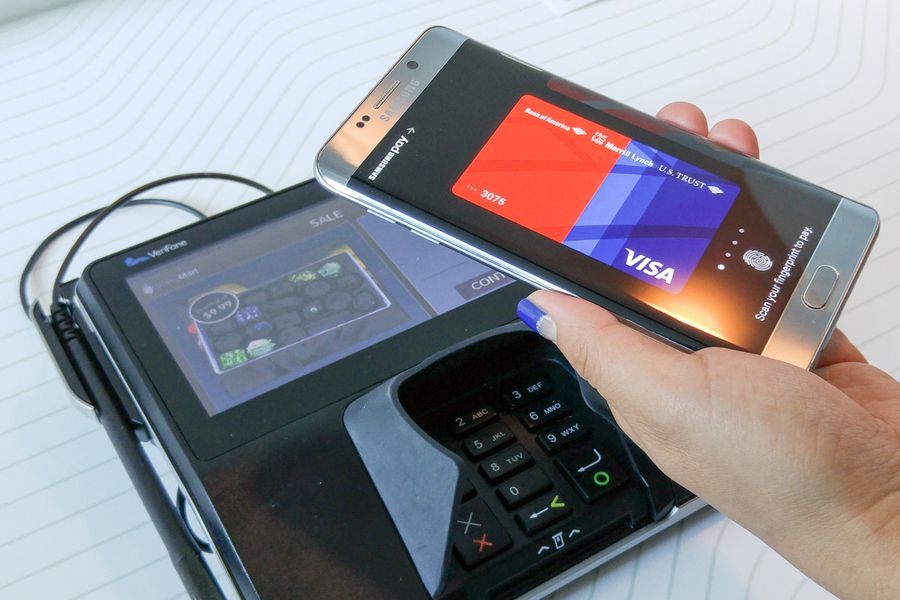
First of all, it is worth noting that you can use NFC communications to pay bills and purchases. To do this, Google offered the Wallet application. Many banks have supported the idea of contactless payment by phone. N FC adapters are installed in terminals for cashless payments in shops and cafes.
In addition to how to use NFC on your phone as a payment method, you can exchange data between devices. It was said above that the speed of such a connection is very low by modern standards – about 400 kbps. Therefore, the technology of combining communication methods was invented. With the help of NFC, devices “recognize” each other, and a connection occurs, and further file transfer is carried out via Bluetooth or wi-fi direct. This provides the possibility of exchanging at high speed, and the connection occurs only by touching the back covers of smartphones.
At the same time, work with NFC tags is possible only if it is available in both phones. This is how Android Beam technology works and its Samsung counterpart Sbeam is a great way to transfer data on an Android phone.
Also, with the help of tags, you can quickly transfer contacts from android to another user.
Technology features
So, your devices have been put into operation, now it’s worth dwelling on the details and features of the procedure itself. What you need to know so as not to shift from foot to foot at the checkout in vain attempts to make a payment by phone and not infuriate a weary line at the supermarket.
The abbreviation NFC stands for Near Fild Communication. The technology is based on the principle of exchanging radio signals between two devices – this technology is similar to the well-known Bluetooth. However, there is one important difference – unlike Bluetooth, which is focused on data transmission at a distance of up to hundreds of meters, NFC is designed to exchange data at a distance of about 10 cm and closer.
The technology was announced in 2004 as an extension for contactless cards. After that, the technology gained quite a lot of popularity and can now be used in many areas.
The advantages of NFC include intuitiveness (one touch is enough to initiate a data transfer), versatility (NFC has the widest range of uses), openness of the technology and its compliance with industry standards, as well as increased security due to low transmitter power and low radius actions.
Using NFC, you can configure other wireless technologies – for example, it takes about 100ms to pair two devices via NFC, while connecting them to each other via Wifi or Bluetooth takes significantly longer, while it can be done via NFC.
NFC facilitates the exchange of information – it is possible to transfer a file from one smartphone to another by simply touching it with your smartphone. At the same time, the matter is not limited to file transfer – you can transfer a payment to the interlocutor, add him to “friends” or start a session of a joint multiplayer game.
It is believed that this is a relatively young development. Its appearance dates back to 2004: it was during this period that the three famous companies Nokia, Philipps and Sony organize the NFC Forum, and three years later they integrate the first NFC tags into a Nokia phone.
– reading mode, in which the phone reads the passive tag, for example, for interactive advertising;
– card emulation, in which the gadget is able to “pretend” to be a card, for example, a payment card or a pass;
– P2P mode, which pairs two phones for data exchange.
Most often, NFC technology assumes that the carrier of the chip is a mobile phone, which is as much a mass device as it is an individual one, and at the same time it is completely inseparable from its owner. In this case, it can be used as a means of payment, which is acceptable if you have a virtual wallet, a key, a means to identify the owner, a travel ticket, a bonus card, and much more.
NFC in the phone – what it is, how it works and where it is applied
The NFC phone’s wireless communication system works on the principle of electromagnetic wave conversion. The circuit resembles a classic detector receiver.
There are two types of NFC tags:
- Active – require an additional power supply and control, they can transmit any signals.
- Passive – operate without power and contain specific immutable information, i.e. they can only transmit a pre-programmed signal.
Consider the example of the connection of two phones.
There is a coil and a capacitor, which are an oscillatory circuit; the diode detects an external magnetic field and sends this signal to the reader – this is the circuit of the NFC tag.
There are two devices with such labels, when you bring them to each other, the label of one of them induces its vibrations to the second label – they are detected and the second device “responds” to the first one. Thus, the process of data exchange, identification, etc. is cyclically repeated
This is a generalized working principle of the NFC system in the phone.
Deciphering the abbreviation NFC is literally translated into Russian as “near contactless communication”. From the name, one can immediately conclude that one of the main features of NFC is that data is transmitted at a very close distance, up to 10 cm. Of course, nothing prevents the exchange of information at a distance of several centimeters via Bluetooth or Wi-Fi, but here it is worth understanding the details .
The principle of operation of NFC is based on the phenomenon of magnetic field induction, through which a short-range high-frequency data transmission between two devices at a frequency of 13.56 MHz is realized.
NFC chip usage examples:
- Transfer media files, contacts or settings between smartphones.
- Cashless payment. Perhaps the most popular use of the system, which is widely used in Russia. There are also various options: paying for travel, providing personal data by touch, etc.
- Reading information. N FC-tags in smart cards and other objects allow you to instantly enter information into your smartphone, for example, from a business card. N FC chips are small enough to be embedded in almost any item.
- Some Sony TVs have the One Touch Mirroring function, which allows you to display video from the phone’s memory on the TV screen.
- Access control to various services or objects, where a device with an NFC chip is used instead of a key.
The first phone equipped with NFC appeared back in 2006 (Nokia 6131), however, such devices have become widespread only in recent years, and now NFC can be found not only in flagships, but also in models of the middle price segment, and even budget smartphones.
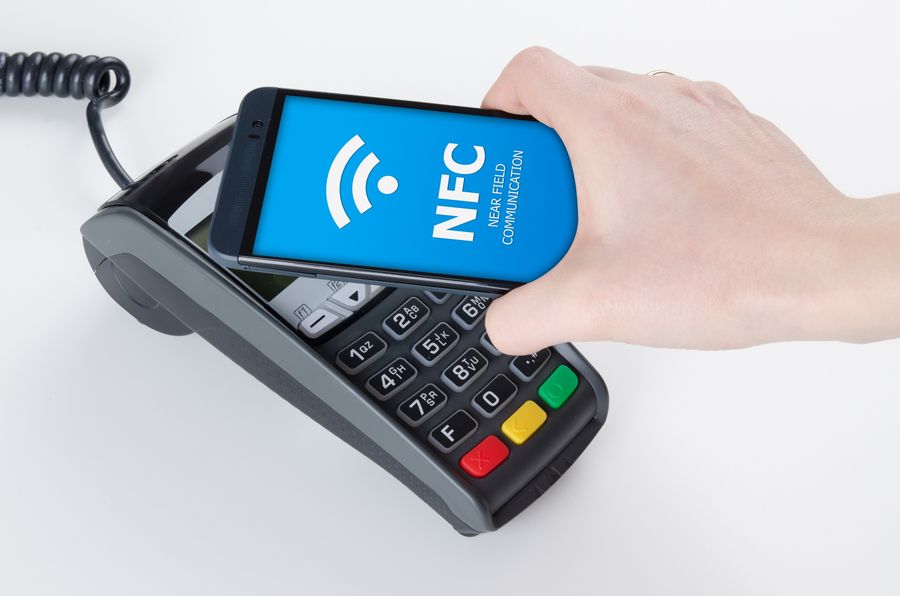
Benefits of NFC
- Instant connection. N FC allows devices to connect without additional manipulations, entering settings and other things, just bring two gadgets with NFC chips to each other.
- Safety. As already mentioned, the short range greatly complicates the process of hacking, but this does not mean that NFC does not have other means of protection. In addition, having lost a bank card, the risk of losing money on it is much higher than in the case of losing a phone, where funds are protected not only by a password, but also by the need to confirm access to the gadget itself.
- Ease of use. You can add several bank cards to the memory of your smartphone at once and pay with them from one device, in addition, NFC works not only with bank cards, but also with transport and discount cards.
Most modern smartphones support this technology, but old or very low-end solutions may not have it. Some manufacturers put the name of the technology on the surface of the device, but there is a more effective way to check if your smartphone has it:
- Open the device settings menu.
- Go to “Wireless & Networks” or “Connected Devices”.
- Open More.
- Find NFC.
And of course, you can always just google the name of your smartphone by adding NFC next to it, and everything will become clear.
Let’s try to figure out how NFC works in a smartphone. Two devices establish a connection with each other when they touch – for example, to pair two smartphones, you just need to attach them to each other.
If we delve into the technical details of the technology, we can say the following.
NFC communication is based on magnetic field induction – loop antennas are located within the near field and form a transformer. For the operation of NFC, frequencies in the range of 13.56 MHz are allocated. The supported data rate can reach 400kbps.
In simple terms, an NFC module is a small radio transmitter/receiver that transmits radio waves over a very short distance. On average, the interaction range is about 10 cm, but as a rule, it is 2-4 cm. The transmission speed of this module is much lower than that of the usual Bluetooth, it is 424 kbps.
- Passive NFC is when the module does not have its own power supply. It is able to give out information only when the active module is brought to it. From it, in fact, he will receive the necessary energy to work through the electromagnetic field. All sorts of stickers in warehouses and on promotional materials work according to this principle.
- Active NFC – in fact, this is the communication option that is used in smartphones. In this case, the device acts simultaneously as a receiver and transmitter, as it has its own power source in the form of a smartphone battery.
Cheap NFC phones under 15,000
It should be noted that not all phones support this data transfer technology. It is known that NFC support is available for such devices as:
- Apple iPhone (from 6S and 6S Plus);
- new Galaxy lineups from Samsung and smartphones from other manufacturers on the Android platform (starting from Android0).
We will look at the most popular models of powerful, stylish and high-quality phones with NFC technology support in 2017. Let’s start:
- Samsung galaxy S. Its price at the time of writing is about 650-700 dollars. Display – 5.5, 8 core processor, 32 GB of memory and 4 RAM. The metal case is a modern appearance and additional protection of the internals of the device. Powered by 8-core processor from Samsung, clocked at 2.3 GHz.
- Sony Xperia XZ Premium – $750, slightly more expensive than Samsung. It has twice the amount of memory – 64 gigabytes and a more powerful camera of 19 MP, versus 12. The processor from Qualcomm has 8 cores operating at a frequency of 2.45 GHz.
- The LG H870G6 costs $750, but its display is larger at 5.7 inches. Processor from Qualcomm 4-core 2.35 GHz. 64 GB of storage and 4 RAM ensure stable operation, and a 13-megapixel dual wide-angle camera ensures good photo quality.
- XIAOMI Mi6 6/128GB costs $600, its powerful 2.45 GHz 8-core qualcomm processor, 6 GB of RAM and 128 GB of memory turn the smartphone into a real multimedia center for games and any applications.
- Samsung galaxy A7 is the cheapest in this list, it costs less than $400 and is therefore quite popular. A good processor from Samsung, although slower than on previous copies – it has 8 cores, and a frequency of only 1.8 GHz, in conjunction with 3 GB of RAM and 32 GB of permanent memory, made it an excellent phone for the Internet. In addition, it has protection against dust and water, a good camera and good performance.
The list of smartphones with NFC was compiled from popular phones priced over 20,000. Not every user will choose a fairly expensive phone, either for financial reasons or for some other reason. Is there something cheaper?
As mentioned earlier, phones with near-field communication technology filled almost all price segments, including budget phones. We offer you to get acquainted with phones in the segment up to 15,000 that support NFC, and their prices.
- Nokia 5 Dual Sim – costs almost $250, it has a normal, but not so up-to-date processor – Snapdragon 430, 8 cores with an operating frequency of 1.4 GHz, runs on android A 13 MP camera will allow you to make good clear pictures.
- Motorola E Plus XT1771 – $200, cheap 4-core MTK 6737 processor, good autonomy – a great phone for everyday use for undemanding users.
- Sony Xperia X – a real $250 background camera, a good lens and a 23 MP sensor – will make your photos bright and sharp. The 6-core Snapdragon 650 and 3 GB of RAM will allow you to play even modern demanding games.
Three decent NFC phone models that almost anyone can easily buy.
NFC prospects
Contactless payment technologies have now become very advanced, and this has led to the emergence of cards such as MasterCard PayPass and Visa PayWave, which have built-in antennas and NFC functionality. This market has become so developed that now companies such as MasterCard, Google, Sprint, Citibank and First Data have formed a service called Google Wallet installed on a number of Android smartphones.

NFC technology is implemented in the form of a chip operating in passive or active mode. The first option involves using the device as a pass or subway card, and the second – receiving information from passive devices, as well as sending it. At the moment, one can observe not too intensive distribution of this technology, but everything is already ready to conquer the world.
In modern society, there are very bright prospects for using this technology to use mobile devices for contactless payments. It is quite possible that in a few years one smartphone will replace the user with a whole range of devices and devices.
NFC as a communication technology has a wide range of applications that can be constantly expanded. So, through NFC, you can implement contactless technologies such as access control to the premises, payments using a mobile phone – including in public transport and stores, various solutions in the field of consumer electronics, healthcare, information exchange programs, and so on.
There are great opportunities in the field of e-commerce – an NFC device can act as a wallet, travel ticket, boarding pass, discount coupon, and so on. N FC-tags in stores allow you to instantly get additional information about the product and other stores with such a product. N FC-tag can be installed in a museum, gallery or exhibition hall – when you read the tag, you will receive information about the object.
Which Chinese phone with NFC should I buy?
Inexpensive phones with NFC support can be bought literally for a penny. Chinese phones with near-field communication can be ordered directly from China, thereby saving quite a lot. Popular now Xiaomi brand produces models in different budgets, ranging from cheap to expensive. Which xiaomi has NFC support? In fact, there are quite a few of them, pay attention to the line: Mi4, Mi5, Mi6 and others – they all have this function.

The cheapest rugged NFC phone is AGM A8, waterproof and runs on android 7 and quad core MSM8916 – you can buy it in the range of $150-200.
What is NFC and how does it use tags?
Tags in this case are small programmable information zones built into billboards, posters or on shelves with products in retail stores. If you touch any of them, you can get some additional information in the form of web addresses, maps, or movie commercials.
The process of working with labels involves a certain sequence of actions to obtain the information embedded in them.
First, make sure that the NFC function in your phone is enabled and its screen is active. Place your phone above the tag so that the NFC detection area touches it. Next, your device will scan the tag, and then display the content received from it. You should touch the content, and then you will open the label.
How do you know if your phone has NFC?
Your smartphone may have this useful technology. To find out if your phone has NFC, you can remove the battery cover – there should be a corresponding mark on its sticker. If you don’t see Near field Communication on the battery, what should you do? How do I know if my phone supports NFC?
Go to the following path in your phone: settings – wireless (connections). There should be an NFC item in this menu – you need to enable it, Android Beam should also be automatically activated. Otherwise, you simply do not have this communication function, but this problem can be solved. Now you know how to check if your phone has NFC, let’s see how to install it in android.
What is the module for
The practical side of the issue. In 2011, NFC technology in smartphones received a powerful impetus to development. Google’s interest became decisive at that time, it was time to actively introduce a useful invention for widespread use.
The security and safety of the new technology determined the main area of application.
- Payments. Together with the applications developed for carrying out payment transactions, the NFC module, from an interesting toy, has turned into a real powerful tool for replacing a bank card in a store. Withdrawing money from the account during the purchase has become possible, it is enough to attach the unlocked device to the trading terminal. The original idea worked perfectly.
- The next moment in this story is very entertaining and gave rise to a lot of research on the technical implementation in real life. We will talk about the use of the module as a reader of passive NFC “tags”. There is a certain information carrier encoded in a special form, inside there is a receiver, the antenna of which sensitively picks up the “interest” directed at it from the side of the emitter. The module reads the advertisement of the product (for example) and displays the necessary information immediately on the screen, there is no need to launch anything additionally on the smartphone. I offer a number of various implemented possibilities in practice:
The key to the castle. It will open a door equipped with a special reader that operates in a short range and is able to “pick up” the command of the owner of the apartment or car. In the West, the NFC tag is increasingly replacing the QR code, the cost and name of the product in the supermarket are now being tracked in a new way. Russia harnesses slowly, we’ll have to wait. Aliexpress offers a whole carload of cheap tags, for personal purposes you can set a kaleidoscope of functions performed, activation occurs when the tag is in close contact with the phone. For example: get into the car and put the smartphone in the equipped place, the passive tag immediately starts working. By the will of the owner, the phone instantly turns into a navigator, Wi-Fi turns off, music turns on, and everything else. How much fantasy is enough. Managing the operation of devices with tags. The printer will print when you need it, the speaker will play at the right time, and the alarm clock will work exactly on schedule. Moreover, over time, the feature of the new development acquires more and more incredible opportunities, I am sure that in the future something will appear that is difficult to imagine today. Personal identifier. Forget your pass at home, no problem. - The key to the lock. It will open a door equipped with a special reader that operates in a short range and is able to “pick up” the command of the owner of the apartment or car.
- In the West, the NFC tag is increasingly replacing the QR code, the cost and name of the goods in the supermarket are now tracked in a new way. Russia harnesses slowly, we’ll have to wait.
- Aliexpress offers a whole carload of cheap tags, for personal purposes you can set a kaleidoscope of functions performed, activation occurs when the tag is in close contact with the phone. For example: get into the car and put the smartphone in the equipped place, the passive tag immediately starts working. By the will of the owner, the phone instantly turns into a navigator, Wi-Fi turns off, music turns on, and everything else. How much fantasy is enough.
- Manage tag devices. The printer will print when you need it, the speaker will play at the right time, and the alarm clock will work exactly on schedule. Moreover, over time, the feature of the new development acquires more and more incredible opportunities, I am sure that in the future something will appear that is difficult to imagine today.
- Personal identifier. Forget your pass at home, no problem.
- Communication in active mode, or peer-to-peer. We lean 2 smartphones with covers to each other, establish contact and pump over whatever you like. If you want exactly the same application, peeped from a friend – please, the download link is in front of you. Like everything else.

The module is an external device that allows you to provide fast identification using a radio link at a distance. The short-range communication module operates at a frequency of 13.56 MHz at speeds up to 424 kbps. This technology is based on the use of specialized chips (including telephone SIM cards) in communication devices.
The widest spread of NFC technology in the near future is associated with the possibility of using it together with smartphones and mobile phones: a mobile device is equipped with a module (an external nfc module for a phone is suitable), which will allow the subscriber to make timely payments for services and goods, simply by bringing his phone closer to the reader. It is usually understood that the funds are debited from the client’s bank account, and not from the account with the mobile operator. connections.
The main types of nfc modules are sim cards, external devices and chips. Also, you can use additional devices for communication and payment, such as NFC modules and stickers. The nfc module for the phone can be ordered separately, or it can be purchased already in the phone as built-in equipment.
Stickers are attached to the body of the phone. There are passive and active. The first ones are not able to exchange data with the phone and do not make it possible to write information to the NFC device through the communication channels of the mobile operator. Active – use the Wi-Fi / Bluetooth communication channel to communicate with the device, which leads to increased power consumption, or the need for constant recharging of the module. A common drawback of such modules is the presence of a mount.
Don’t worry if you don’t find the built-in function, there is a way to connect NFC to your device. But you can only do this if the panel cover on the back and the SIM card slot on your smartphone/tablet are removable. Installing NFC in this case is not difficult.
The best solution is to install a special module – an external communication device. It is compatible with almost all smartphones, easy to use and gives you access to NFC without buying a new phone.
https://www.youtube.com/watch?v=85oWPy-vsz4
Main types: chips, SIM cards, external devices, stickers. The last of them are of two types: passive – which do not allow data to be exchanged, and active – use Bluetooth and Wi-fi communication channels for transmission, which significantly increases energy consumption.
These stickers are attached to the outer shell of the phone, which is also not very practical.
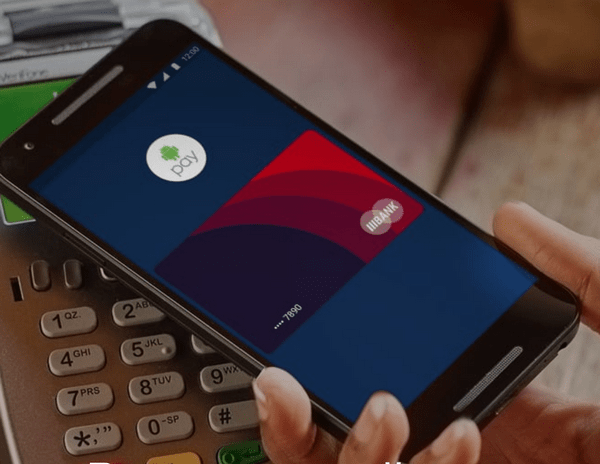
The most popular are the following:
- NFC SIM. Now available for purchase from most mobile operators. You can find out about the availability of such a SIM in the communication salon. You only need to install the finished card in your phone or tablet. This type of module is the most affordable and easy to install.
- NFC antenna. The second way, for which you will need to purchase an NFC antenna. You can do this in the communication salon. Next, the antenna is attached to the SIM card and inserted into the device.
As you have already seen, installing the module is quite simple and safe: you do not need to download additional applications or programs. However, these services do not completely replace the Android Pay app, but are just some of its many features.
An NFC tag is a miniature device in the form of a chip that can be attached almost anywhere: from the phone to being inserted under the skin!
We will not use such radical methods, but it is worth noting that contacts, settings, a URL and other data and commands can be placed on the chip. All gadgets can support the tag.
In order to read data from such a device, you need to find a specialized official application on Google Play and then, after installation, you can give the tag various commands for execution.
Don’t be discouraged if you don’t find the NFC feature on your phone. If structurally, an NFC antenna for your phone is an alien concept, do not despair, there is a simple solution. Install the NFC module. You just need to find a SIM card with an NFC chip on sale and install it in your phone.
This NFC SIM card can be installed to make payments with your phone.
Another way to install an NFC module in your phone is to equip it with a full-fledged NFC antenna. It is glued to the SIM card, and the other half is placed under the cover of the smartphone. This conversion adds a lot of possibilities for working with this technology.
Now you know what to do if there is no NFC!
Given that this technology has only recently begun to be actively used in the field of mobile phones, many users naturally have questions like: “Why is this NFC module needed at all?” and “What can you do with NFC?”. So, first of all, I would like to note that the absence of this module does not automatically make a smartphone bad or inferior.
- Quick transfer of contacts from one phone to another;
- Fast transfer of images, documents and files;
- Ability to make contactless payments;
- Ability to read information from special stickers.
How to transfer a music file using NFC
To begin with, you should make sure that the necessary function is enabled on your phone and the recipient’s device, and that the screens of both gadgets are active. You can open the music player by going to the main screen, where the “Multimedia” item will be selected, and after it the “Music” icon. If the latter is not displayed, then touch the “Apps screen” symbol, and after it – “Music”.
To open the media library, you need to visit the “My Music” tab. After selecting a music category, you can proceed to select a track that will be sent to a friendly device. You should touch it to play, and then click on the pause. Broadcasting occurs only when the track is playing or paused.

The transmitting and receiving phones must be turned back to each other so that their NFC recognition zones touch. When the connection is established, both devices will vibrate, and then the broadcast will begin. After vibration, the devices should be moved away from each other. This prevents attempts to reconnect, which could interfere with the transfer process.
How to enable and use nfc?
In the settings and menu of the phone there is a group of parameters “Wireless networks”, click “More” – the list of parameters will open. The NFC item can be turned off, you need to switch the toggle switch on the screen to the “On” position. The NFC setup on your phone is now complete.
We pass along the described path from the previous paragraph. Almost all manufacturers have the same settings for Android phones.
To activate the option, you need to check the very function of the module for the phone and the next one, called Android Beam. By default, the system should pick up the included module on its own, but in some cases it is advised to duplicate the operating system and start the application manually.
In addition to the described manipulations, check if the device is in flight or sleep mode, in addition, you need to unlock the smartphone.
A device with a locked screen will not perform any payment actions. Another degree of protection against unauthorized access to your funds.
Do you often forget your bank credit card? Then in this case, if your Android is equipped with an NFC chip, then it can easily become a credit card!
Important moments
So, if we talk about what NFC is, then we should also say about the presence of certain points that can be called the “dark side” of this technology. While NFC can make many everyday tasks easier, sometimes it makes life a lot more difficult when you look at it from a security point of view.
This technology only works at close range. If you do not use NFC, then for complete protection and to ensure your safety, you can turn it off. In this case, all its convenience simply disappears, but this allows you to use other methods. It all depends on the individual settings of the smartphone.
It is worth imagining such a scenario as the loss of a phone or its theft. Then the person who found or stole it will be able to use all payments and functions. However, it’s worth being realistic here, because you can lose the keys to your apartment or car or wallet, which is fraught with the same danger. That is, NFC is only as secure as the user decides.
Withdrawal
Modern technologies not only simplify but also speed up our life and make it more comfortable. This technology will not only save time, but also do it very safely.
The security of the connection is guaranteed by the near-field communication, because you almost touch the tags when transmitting data. Applications that use NFC technology allow you to use the gadget not only for payment, but also to change phone modes when you read the tag. You can place tags in your car, home, bedroom, and set up which parameters will match which tag – this greatly automates your device.
First devices
NFC support first appeared in the Nokia 6131, released in 2006. However, such a function turned out to be completely useless and unclaimed, since at that time there was no infrastructure. The NFC module is currently equipped with a serial smartphone Sony Xperia S. This device is equipped with a dual-core processor and a 43-inch HD screen.
It operates under the operating system from Google. Android-NFC is no different from a similar function in other platforms. This device comes with two NFC tags called XPERIA SmartTags, which allow you to program the launch of certain operations in the device within their range, for example, turning on the navigator or turning off Wi-Fi.

Intel has already addressed issues related to the integration of NFC chips into next generation ultrabooks, and only this can guarantee that this technology has a great future.
The birth of the future
So, if we consider NFC technology (how to use it is already a little clear), then it is worth saying about who or what it owes its appearance to. In 2002, companies such as Sony and Phillips teamed up to develop an entirely new radio standard, which was given the name.
Prior to this, attempts were repeatedly made to form technologies of this kind: Phillips created the MIFARE technology, and Sony had a similar development called FeliCa. Despite the fact that these technologies had a lot in common, they turned out to be incompatible with each other. The created standard was intended to absorb all the advantages of past developments, as well as open up opportunities for its application in practice.
Speaking about what NFC is, it should be mentioned that since its inception and development, this technology has been focused on the implementation of interaction between different electronic devices, between which there is no wired connection. As examples, it is appropriate to indicate personal computers, PDAs, mobile phones, video cameras, and other gadgets.
We can say about such a feature of the implementation of the interaction of devices working with the support of this technology as the rapid initiation of communication between devices after they are brought close to each other at a fairly close distance. After the connection is established, an attempt is made to transfer data between the devices.
For example, if you bring a working camera to the TV, provided that the NFC module works in both gadgets, the image transfer process will immediately begin. If a mobile phone or PDA is in close proximity to a personal computer, this will allow you to immediately start synchronizing the address book or some other documents.